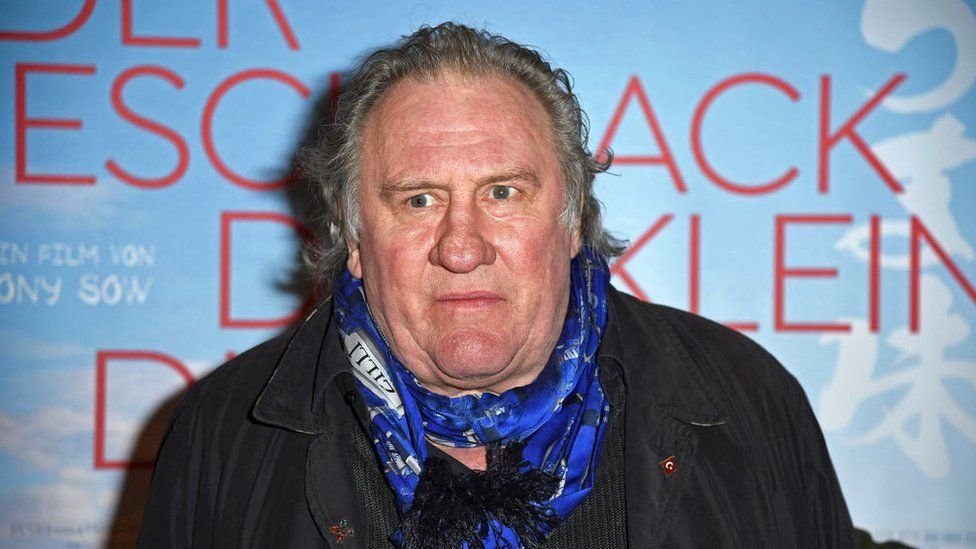
Gérard Depardieu. The name alone conjures images of a cinematic force, a towering figure whose presence has dominated the screen for over half a century. From the raw, unrefined energy of his early anti-hero roles to the nuanced portrayals of literary giants, his journey through 'Gérard Depardieu's Notable Filmography and Career Highlights' is a testament to extraordinary talent, remarkable versatility, and, more recently, a career navigating profound controversy. This guide delves into the saga of a performer who became a global icon, examining the artistic peaks and the deeply troubling shadows that have come to define his legacy.
At a Glance: A Colossus of Cinema
- Early Life & Breakthrough: Born in 1948 in Châteauroux, France, Depardieu overcame a challenging youth and stuttering to burst onto the scene with Les Valseuses (1974).
- French Icon: Dominated French cinema in the 1980s, winning his first César Award for The Last Metro (1980) and earning acclaim for Jean de Florette (1986).
- Global Recognition: Achieved international stardom with Cyrano de Bergerac (1990), earning an Academy Award nomination, Golden Globe, and Cannes Best Actor award. Made a successful Hollywood crossover with Green Card (1990).
- Prolific & Versatile: Boasts over 170 feature film credits across drama, comedy, action, and historical genres, continuing into the 2020s with roles in the Asterix series, Potiche, Lost Illusions, and Maigret.
- Awards & Accolades: A record 15 César Award nominations for Best Actor, winning twice, plus a César d'honneur in 2017. Also secured two Golden Globe awards.
- Recent Controversies: Faced multiple sexual misconduct allegations from over 20 women since 2018. Convicted in May 2025 for sexual assault, receiving an 18-month suspended sentence. This conviction marks a "seismic change" for his career.
- Complex Legacy: His immense artistic contributions are now inextricably linked with serious legal and ethical questions, posing significant challenges for how his work is viewed moving forward.
The Making of a Titan: From Châteauroux to Center Stage
Gérard Depardieu’s origin story is far from the glitz of the silver screen. Born into a working-class family in Châteauroux, France, in 1948, his early life was marked by instability, petty delinquency, and a pronounced stutter. He left primary school prematurely in the early 1960s, a testament to a childhood that offered few traditional paths to success. Yet, it was this very lack of convention that perhaps forged the raw, untamed spirit that would later captivate audiences worldwide.
His journey to acting began around 1964 when he moved to Paris. Without formal education, Depardieu gravitated towards informal acting groups and eventually the avant-garde Café de la Gare troupe, a crucible for many French talents. It was here that his raw talent began to be noticed. He underwent formal training with Jean-Laurent Cochet and, crucially, sought speech therapy with Alfred Tomatis, which helped him overcome his stutter. Simultaneously, he embarked on a self-guided education, immersing himself in literary classics. This period of intense self-development laid the groundwork for the articulate and emotionally resonant performer he would become.
The Seismic Breakthrough: Les Valseuses (1974)
The film that truly launched Depardieu into the public consciousness, solidifying his image as a powerful, often provocative presence, was Bertrand Blier's Les Valseuses (released internationally as Going Places) in 1974. His portrayal of Jean-Claude, a boorish, unrefined, yet undeniably magnetic anti-hero, alongside Patrick Dewaere and Miou-Miou, redefined French cinematic masculinity. The film's transgressive nature and Depardieu's fearless performance resonated deeply, attracting over 3 million admissions and instantly making him a household name. This role was a crucial turning point, securing him over a dozen lead roles by the late 1970s and setting the stage for an extraordinary career trajectory.
Dominating the 80s: French Cinema's Reigning Star
The 1980s cemented Depardieu's status as the quintessential French actor. With over 20 films released during this decade, he demonstrated an astonishing range, transitioning effortlessly between dramatic intensity and comedic flair. This period showcased his ability to inhabit complex characters, often with a brooding intensity beneath a rough exterior.
One of his defining roles from this era was in François Truffaut's The Last Metro (1980). Here, he played Bernard Granger, an actor working in a Parisian theatre during the Nazi occupation. His performance earned him his first César Award for Best Actor, France’s most prestigious film award, signaling his arrival as a serious dramatic force. The film itself was a critical and commercial success, exploring themes of resistance, artistic integrity, and survival.
Further critical acclaim followed later in the decade with Claude Berri’s Jean de Florette (1986). In this rural epic, Depardieu delivered a heart-wrenching performance as Jean Cadoret, a hunchbacked city man who moves to the Provençal countryside, only to be tragically manipulated by his greedy neighbors. His portrayal of an innocent dreamer battling against harsh realities was deeply moving and earned him widespread praise, further consolidating his position as a leading man capable of immense emotional depth. These roles, among many others, showcased his versatility and established him as a consistent, powerful presence in French cinema.
The Global Leap: Cyrano, Hollywood, and Beyond
The late 1980s and early 1990s marked a significant acceleration in Depardieu's international career, elevating him from a French star to a global cinematic figure. This period saw him take on roles that not only showcased his acting prowess to a wider audience but also earned him some of his most prestigious accolades.
The Iconic Cyrano de Bergerac (1990)
The pinnacle of this international ascent arrived with Jean-Paul Rappeneau's magnificent adaptation of Edmond Rostand's Cyrano de Bergerac (1990). Depardieu's portrayal of the poet-soldier with the famously large nose was nothing short of a revelation. He captured Cyrano's wit, passion, insecurity, and tragic heroism with breathtaking skill, delivering the demanding dialogue (often in rhyming couplets) with remarkable panache. This performance was universally lauded, earning him:
- An Academy Award nomination for Best Actor, a rare feat for a performance entirely in French.
- The Golden Globe Award for Best Actor in a Drama.
- The Cannes Film Festival Best Actor award.
His Cyrano became the definitive screen interpretation, solidifying his status as an actor of profound international caliber.
Crossing the Atlantic: Hollywood and English-Language Roles
Riding the wave of Cyrano's success, Depardieu made his official Hollywood debut in Green Card (1990), a romantic comedy directed by Peter Weir. In this film, he played Georges Fauré, a charming but slightly unruly Frenchman who enters into a marriage of convenience to gain a green card. Opposite Andie MacDowell, his natural charisma and comedic timing shone through, endearing him to American audiences. His performance in Green Card earned him his second Golden Globe Award for Best Actor in a Musical or Comedy, proving his ability to charm in English-language roles.
This Hollywood foray led to appearances in other major international productions. He starred in Ridley Scott's ambitious epic 1492: Conquest of Paradise (1992), portraying Christopher Columbus. While the film received mixed reviews, Depardieu's commitment to the role was evident. Later, he joined an ensemble cast in The Man in the Iron Mask (1998), playing Porthos alongside Leonardo DiCaprio, Jeremy Irons, and John Malkovich, further cementing his presence in mainstream international cinema.
Beyond Hollywood, Depardieu had also collaborated with esteemed international directors earlier in his career, notably in Bernardo Bertolucci's epic historical drama 1900 (1976). This sprawling film saw him share the screen with Robert De Niro, depicting the lives of two men born on the same day in rural Italy amidst changing political landscapes. His work here demonstrated an early willingness to engage with diverse filmmaking traditions and storytelling on a grand scale. Even later in his career, he lent his distinctive voice to the memorable character of the Cook in Ang Lee's visually stunning Life of Pi (2012), showcasing his continued appeal for international collaborations. To dive deeper into this particular role and its significance, you can Explore Depardieus Life of Pi.
A Prolific Presence: Staying Power into the New Millennium
Throughout the 2000s and 2010s, Gérard Depardieu maintained an astonishingly prolific output, defying typical career trajectories. He continued to embody diverse characters, reinforcing his reputation for versatility and an insatiable appetite for work. His enduring presence on screen was a testament to his unique appeal and formidable acting skills.
One of his most recognizable and beloved roles from this period was as Obelix in the live-action Asterix film series. Beginning with Asterix & Obelix Take On Caesar (1999) and continuing through several sequels, Depardieu perfectly captured the lovable, super-strong Gaulish warrior. These films, blending slapstick comedy with adventure, showcased his lighter side and introduced him to a new generation of audiences, both in France and internationally.
He continued to work with acclaimed French directors, demonstrating his enduring relevance in serious cinema. In François Ozon's Potiche (2010), Depardieu reunited with his Last Metro co-star Catherine Deneuve in a sparkling comedy about a submissive housewife who takes over her husband's umbrella factory. His performance as Maurice Babin, a former lover and Communist mayor, was both charming and nuanced, highlighting his continued comedic prowess.
More recently, Depardieu has continued to deliver powerful performances. In Xavier Giannoli's Lost Illusions (2021), a critically acclaimed adaptation of Balzac's novel, he played the role of Dauriat, a theatrical director and newspaper owner. His turn earned him yet another César nomination, proving his capacity to remain at the forefront of French dramatic acting. He also took on the iconic detective role in Maigret (2022), offering a contemplative and understated portrayal of Georges Simenon's famous character.
His consistent output and unwavering commitment to his craft have been recognized with numerous accolades throughout his career. Depardieu holds a record 15 César Award nominations for Best Actor, winning twice for The Last Metro (1980) and Cyrano de Bergerac (1990). In recognition of his monumental contributions to French cinema, he was also honored with a César d'honneur (Honorary César) in 2017, a testament to his indelible mark on the industry.
Beyond the Screen: Versatility and Craft
What makes Gérard Depardieu such a compelling figure beyond just his sheer volume of work? It's his unparalleled versatility. Critics and audiences alike have lauded his ability to embody an astonishing array of archetypes, often within the same year. He could be the sensitive artist, the brutal criminal, the bumbling comedic relief, or the stoic historical figure. This chameleon-like quality allowed him to transcend easy categorization, making each new role an anticipated event.
His acting style is often characterized by a visceral, raw energy coupled with an innate intelligence. He doesn't just play characters; he inhabits them, bringing a palpable weight and authenticity to every performance. Whether it's the physical demands of Cyrano de Bergerac or the subtle emotional turmoil in a domestic drama, Depardieu's commitment to the truth of his characters is always evident. He possesses a unique ability to convey profound emotion through minimal gestures or a single, piercing gaze, making him one of the most expressive actors of his generation.
This craft has not only earned him critical acclaim but also made him a go-to actor for directors across various genres. He could switch from lighthearted comedies to intense dramas, from period pieces to contemporary thrillers, never feeling out of place. This stylistic fluidity is a rare trait among actors and underscores why his filmography is so vast and diverse, offering something for every cinematic taste.
The Shadow Lengthens: Sexual Misconduct Allegations and Their Impact
While Gérard Depardieu's artistic achievements are undeniable, his career has, since 2018, become increasingly overshadowed by a growing number of serious sexual misconduct allegations. This period marks a profound and deeply troubling chapter, raising complex questions about how to reconcile a performer's artistic legacy with their personal conduct.
The accusations began to surface with increasing frequency, involving over 20 women who have come forward with allegations of sexual harassment and assault. The complaints span decades, painting a troubling picture of alleged behavior on and off film sets.
The 2025 Conviction
A pivotal moment occurred in 2021 during the filming of Les Volets Verts. It was then that two women—a set dresser and an assistant director—accused Depardieu of sexual assault. These accusations led to a formal trial, culminating in a significant legal judgment. On May 13, 2025, a Paris court found Depardieu guilty of sexually assaulting the two women. The court sentenced him to an 18-month suspended prison term and ordered him to pay damages: €8,000 to one victim and €4,000 to the other, in addition to legal fees.
Depardieu has consistently denied criminal intent in these cases, arguing that his behavior, while perhaps unorthodox, was sometimes inherent to the artistic process and misunderstood. However, the court's verdict indicates a clear rejection of this defense.
Further Allegations and Broader Context
Beyond the 2025 conviction, additional complaints emerged in December 2023 and February 2024. A comprehensive investigation by the French news outlet Mediapart in April 2023 further detailed accounts from 13 women, spanning various periods of his career and describing similar patterns of alleged misconduct. These accumulating testimonies have intensified scrutiny and sparked a national conversation in France about celebrity accountability.
The "Seismic Change" for a Cultural Icon
The 2025 conviction has been described as a "seismic change" for Depardieu's career. For a long time, despite early allegations, the impact on his domestic career in France was limited. This was partly due to his immense status as a cultural icon, almost untouchable, and the public defenses he received from prominent figures, including French President Emmanuel Macron. Macron notably defended Depardieu in 2023, stating he was "proud of Depardieu" and that he was being subjected to a "manhunt."
However, the legal conviction has altered this landscape. While international collaborations had already waned somewhat earlier, notably after his controversial 2013 relocation to Russia amid tax disputes, the misconduct cases have amplified domestic hesitancy. Production companies and colleagues are now less willing to work with him, and his public image, once synonymous with French cinema, is irrevocably tarnished.
It's important to note that the legal challenges are not yet fully resolved. An impending criminal trial for separate 2018 rape allegations is scheduled to take place after September 2025, suggesting that the legal battles surrounding Depardieu are likely to continue.
Navigating the Legacy: A Complex Figure
How does one reconcile the artistic brilliance of Gérard Depardieu with the gravity of the sexual misconduct allegations and his conviction? This is the central, difficult question now facing audiences, critics, and the film industry. His career highlights—the raw power of Les Valseuses, the poetic grace of Cyrano de Bergerac, the comedic timing in Green Card, and the sheer volume of his work—are an undeniable part of cinematic history. Yet, these achievements now exist alongside documented instances of harmful behavior that have caused distress to many women.
For many, the "seismic change" means that appreciating Depardieu's filmography requires an active acknowledgment of these issues. It necessitates a critical lens that separates the art from the artist, without excusing the artist's actions. It highlights a broader societal reckoning with figures who have held immense power and privilege, and the consequences when that power is allegedly abused.
His status as a "cultural icon" in France for so long, and the initial reluctance of some to confront the allegations, reflect a deeper issue in how societies protect and mythologize their artistic heroes. The shift in public perception and the legal outcomes signal a crucial turning point, indicating that even the most celebrated figures are not immune to accountability.
The Road Ahead: Uncertainties and Enduring Work
The future of Gérard Depardieu's acting career remains highly uncertain. The 2025 conviction, coupled with the ongoing legal proceedings for the 2018 rape allegations, will likely curtail significant future roles, particularly internationally. The court's decision sends a clear message about unacceptable behavior, and the industry, both in France and globally, is becoming increasingly cautious about associating with individuals facing such serious charges.
Despite the current challenges, his existing body of work—over 170 films—will endure. Film archives, streaming platforms, and cinematic retrospectives will continue to feature his performances. The task for audiences and critics now is to engage with this monumental filmography while holding the complex reality of the artist in mind. It's a journey into the heart of a career that, for decades, defined an era of French and world cinema, now forever marked by controversy.
Key Takeaways for Appreciating a Monumental (Yet Complicated) Career
Understanding Gérard Depardieu's career is to grasp the heights of cinematic achievement intertwined with profound ethical dilemmas. Here’s what to consider as you explore his expansive filmography:
- A Master of Transformation: Dive into his roles across genres. From the youthful rebellion of Les Valseuses to the majestic poetry of Cyrano de Bergerac and the charming foreigner in Green Card, witness a performer who truly could do it all.
- Context is Key: Remember that his early career blossomed from a challenging background, shaping the raw intensity often seen in his performances. This context helps explain, though not excuse, aspects of his persona.
- Beyond the Stereotype: Don't just focus on his more boisterous roles. Seek out his nuanced dramatic performances, such as in The Last Metro or Jean de Florette, to appreciate his full range.
- Acknowledge the Shadow: When engaging with his work, it is imperative to acknowledge the severe sexual misconduct allegations and the 2025 conviction. These are not minor footnotes; they are significant aspects of his public persona and impact how his art is received.
- The Industry's Evolving Standards: His career's trajectory, particularly its recent downturn, serves as a powerful case study in the entertainment industry's shifting landscape regarding accountability and conduct.
- Separate the Art (Critically): It's possible to analyze and appreciate the technical artistry and impact of his performances while unequivocally condemning his alleged and proven misconduct. This nuanced approach is essential for a complete understanding of his legacy.
Gérard Depardieu's career is a complex tapestry—brilliant in its artistry, but now deeply stained by serious allegations. His filmography offers a rich chronicle of a performer's journey through cinema, inviting viewers not just to watch, but to reflect on the intricate relationship between art, artist, and accountability.