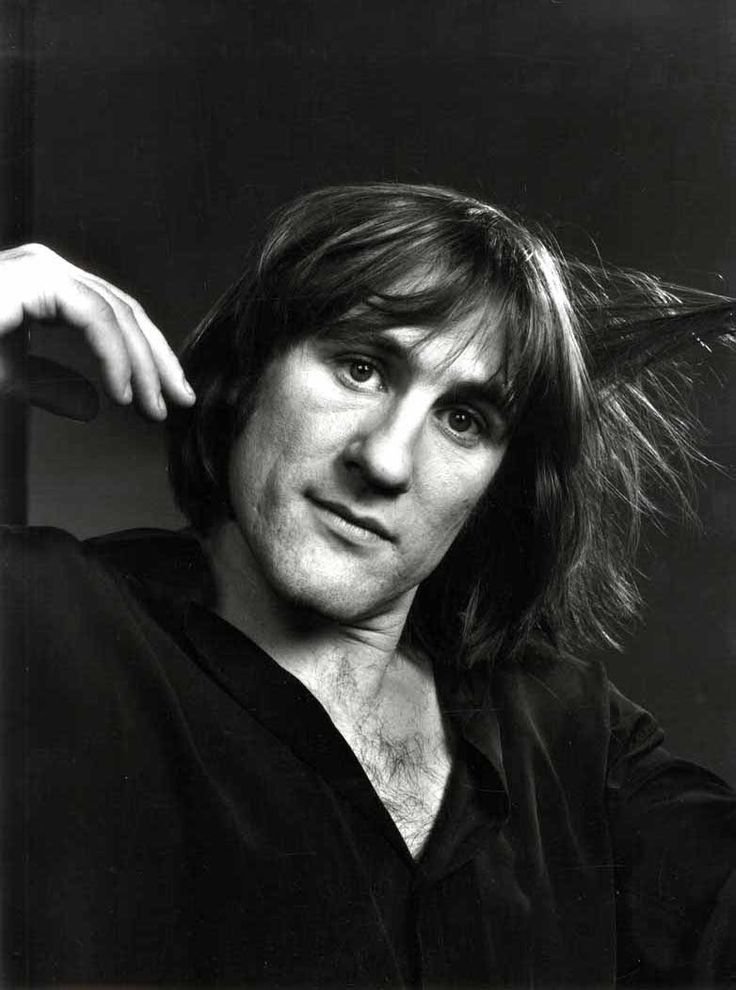
It happens in a flicker: a deep voice, a imposing frame, a certain rugged charm on screen, and your brain immediately registers "Gérard Depardieu." But then, a second glance, a closer listen, and the realization hits—it's someone else entirely. You’re not alone. The unique blend of commanding physicality, raw emotion, and unexpected gentleness that defines Depardieu has made him one of cinema's most recognizable and revered figures. Yet, over the decades, a handful of actors have emerged whose own distinctive qualities occasionally lead to a delightful, if fleeting, case of mistaken identity.
This guide dives into the fascinating world of screen doppelgangers, exploring the specific traits that might cause you to confuse these talented individuals with the French icon, and just as importantly, how to confidently tell them apart.
At a Glance: Spotting the Depardieu Imposter
- Depardieu's Signature: Look for the distinctive French accent (when speaking English), a specific facial structure (notably the nose and wide-set eyes), and a unique combination of brutishness and vulnerability.
- Why the Confusion: It's often a mix of imposing physical presence, a similar voice quality (deep, gravelly), shared European sensibilities in acting, and often tackling "larger-than-life" character roles.
- Key Differentiators: Pay attention to accent, precise facial features, career trajectory, and the specific nuances of their acting styles. Each actor, despite surface-level similarities, carves out a profoundly unique artistic path.
- More Than Looks: The "mistake" is often about an impression or vibe rather than identical features, highlighting the power of screen presence.
The Enduring Enigma: What Makes a Depardieu?
Before we delve into who might be mistaken for him, it’s crucial to understand the singular force that is Gérard Depardieu. Born into humble beginnings in Châteauroux, France, Depardieu’s journey to international stardom is as compelling as any character he's portrayed. With minimal formal education, he found his calling in acting, transforming a raw, almost feral energy into a sophisticated, nuanced craft.
His screen debut in 1965 laid the groundwork for a career that would redefine French cinema and captivate global audiences. From his breakout in Les Valseuses (1973) to the critically acclaimed 1900 (1976) and Le Dernier Métro (1980), Depardieu quickly became France's most popular actor. His international recognition soared with roles like the titular poet in Cyrano de Bergerac (1990), for which he won Best Actor at Cannes, showcasing his incredible range and ability to embody historical figures with profound depth.
Depardieu's physicality is undeniable – a broad, often imposing frame that he uses with surprising grace. His face, with its distinctive nose and expressive eyes, can convey immense sorrow, boisterous joy, fierce anger, or tender vulnerability, often within the same scene. He’s known for a deep, resonant voice, further textured by a thick French accent when performing in English-language films, such as his memorable turn in Depardieus Life of Pi guide. This combination of raw power, profound emotional intelligence, and a distinctly European theatricality creates a screen presence that is, quite frankly, difficult to replicate.
Why the Confusion? Deciphering Screen Doppelgangers
The instances of mistaking one actor for another often stem from a confluence of factors beyond just a passing physical resemblance. When it comes to Gérard Depardieu, the confusion typically arises from a blend of:
- Physicality and Stature: Many of the actors who draw comparisons share a similar robust build or an imposing physical presence, even if their facial features differ on closer inspection. The sheer mass or gravitas they project can be the initial trigger.
- Vocal Quality: A deep, gravelly, or resonant voice can be a powerful cue. Depardieu's voice is instantly recognizable, and actors with similar vocal characteristics, especially when speaking English with a non-American accent, can momentarily trick the ear.
- Shared European Sensibilities: Many of the actors who get compared to Depardieu, particularly those of European descent, carry a certain "Old World" gravitas or acting style that feels less overtly Hollywood. This shared cultural backdrop can create a similar on-screen aura.
- Archetypal Roles: Depardieu frequently plays "larger-than-life" characters: historical figures, complex anti-heroes, men of great passion or despair. Actors who frequently inhabit similar archetypes might trigger the association.
- Quick Glimpse vs. Deep Dive: Often, the confusion happens in a fleeting moment—a trailer, a quick cutaway, or seeing an actor out of context. It’s in these superficial glances that the brain latches onto the most prominent, shared characteristics.
Understanding these underlying reasons helps us appreciate why certain actors might consistently find themselves in the same mental "category" as Depardieu, even when their individual artistry is profoundly unique.
Contenders for the Depardieu Double-Take
Let's meet the actors whose powerful screen presences and distinctive styles occasionally lead audiences to do a double-take, wondering if they're watching Gérard Depardieu.
Jean Reno: The Melancholy French Counterpart
Jean Reno is perhaps the most frequent and understandable source of confusion, particularly for those less familiar with French cinema's vast landscape. Like Depardieu, Reno is a quintessential French actor with an imposing physical presence and a career spanning decades across both European and Hollywood productions.
Where the Similarities Lie:
- French Origin and Accent: This is paramount. Both actors carry a distinct French identity into their English-language roles, including their accents.
- Physicality: Reno possesses a tall, strong build, often conveying a sense of grounded power. While not as overtly bulky as Depardieu in his prime, he shares that weighty, physical presence.
- Serious Demeanor: Reno frequently plays serious, often melancholic or gruff characters. Think of his roles in Léon: The Professional or Ronin, where he embodies a world-weariness and quiet intensity that can sometimes echo Depardieu's more somber performances.
- Versatility in Genre: Both actors move seamlessly between gritty thrillers, historical dramas, and even comedies (though Reno's comedic roles are often more understated).
How to Tell Them Apart: - Facial Features: This is the clearest differentiator. Reno has more angular, sharper features, a distinctly different nose, and often a more piercing, focused gaze compared to Depardieu's rounder face and more expressive, almost benevolent eyes.
- Acting Style: While both are intense, Reno often projects a cooler, more controlled intensity, frequently portraying characters who are stoic and internally complex. Depardieu, conversely, can explode with raw, unrestrained emotion that is often more outwardly expressed.
- Vocal Tone: While both have deep voices, Depardieu's tends to be more resonant and often has a greater theatrical flourish, even in English. Reno's voice is more gravelly and subdued.
Key Films to Compare:
If you want to see the distinction, watch Depardieu in Cyrano de Bergerac (for his theatrical range) and Reno in Léon: The Professional (for his stoic intensity).
Robbie Coltrane: The Gentle Giant of the Screen (RIP)
Though Scottish, the late Robbie Coltrane shared a profound, almost primal screen presence with Depardieu, particularly in his later career. Known globally as Hagrid from the Harry Potter series, Coltrane was a versatile actor whose imposing stature, warmth, and gruff exterior often belied a deep sensitivity.
Where the Similarities Lie:
- "Larger-than-Life" Persona: Both actors command attention purely through their physical presence. Coltrane, like Depardieu, was often cast in roles that required an immense, almost mythic stature, whether for comedic or dramatic effect.
- Blend of Gruffness and Gentleness: This is a hallmark similarity. Both actors excelled at portraying characters who were physically intimidating or rough around the edges, yet possessed a profound inner warmth, loyalty, and vulnerability. Think Depardieu's Jean de Florette or Coltrane's Hagrid.
- Deep, Resonant Voice: Coltrane's voice was deep, rich, and often gravelly, lending an air of authority and emotional weight that could, at times, sound similar to Depardieu's vocal cadence, especially when both were speaking English.
- Bearded Appearance: In many of their iconic roles, both actors sported significant beards, which can obscure facial features and enhance the "rugged individual" aesthetic.
How to Tell Them Apart: - Accent and Nationality: Coltrane's distinct Scottish accent is a clear giveaway when speaking. Even in character, his voice carries a different cadence and regional flavor than Depardieu's French lilt.
- Facial Structure: Without the beard, Coltrane had a rounder, softer face than Depardieu's more defined, albeit often fleshy, features. His eyes conveyed a specific kind of twinkle or melancholic sincerity that was uniquely his.
- Comedic Timing: While Depardieu has shown great comedic timing, Coltrane was a master of it, often using his size for physical comedy or delivering dry wit with expert precision (e.g., Cracker). His humor often felt more overtly British.
Key Films to Compare:
Contrast Depardieu in Green Card (for his comedic charm with a foreign accent) with Coltrane in Cracker (for his gruff, intelligent, and often humorous dramatic work).
Nick Nolte: The American Ruggedness
Nick Nolte, the quintessential American rugged individualist, might seem like an unlikely comparison, but in specific phases of his career and certain roles, the overlap in screen presence can be surprising. Nolte often embodies a raw, weathered masculinity that, coupled with a distinctive voice, sometimes echoes Depardieu’s gravitas.
Where the Similarities Lie:
- Weathered, Rugged Aesthetic: Both actors have often cultivated a look of experience, world-weariness, and a certain unpolished charm. Nolte, particularly in his later career, sported a famously rough-hewn look that could be seen as an American counterpart to Depardieu's more "earthy" European demeanor.
- Distinctive Gravelly Voice: Nolte's voice is famously deep and raspy, a direct result of his lifestyle choices. This gruff vocal quality shares a certain resonance and power with Depardieu's deeper tones, especially when expressing emotion.
- Complex, Flawed Characters: Both actors are drawn to portraying complicated, often morally ambiguous characters who wrestle with internal demons but possess an undeniable strength or charm. Think Depardieu in Colonel Chabert or Nolte in Affliction.
- Physical Presence: While Nolte's build has varied, he often brings a strong, grounded physicality to his roles, similar to Depardieu's command of the screen.
How to Tell Them Apart: - Accent and Nationality: This is the most obvious difference. Nolte’s distinctly American accent, even when gruff, is far removed from Depardieu’s French inflection.
- Facial Features: Nolte has a more angular, distinctly American facial structure with often intense blue eyes, quite different from Depardieu's broader, more traditionally European face.
- Acting Style: Nolte’s acting often conveys a sense of raw, unrefined intensity, sometimes bordering on explosive. Depardieu, while capable of immense rage, often brings a greater theatricality and a more nuanced, "classical" European acting style to his roles, even when playing a common man.
Key Films to Compare:
Watch Depardieu in Danton (for historical gravitas) and Nolte in Warrior (for raw, emotional intensity and a gravelly voice).
Brian Cox: The Commanding European Statesman
Brian Cox, the Scottish actor renowned for his powerful, often intimidating portrayals (most famously as Logan Roy in Succession), shares a certain commanding European gravitas with Depardieu that can lead to a brief moment of mistaken identity, especially if focusing on overall presence rather than specific features.
Where the Similarities Lie:
- Powerful Screen Presence: Both actors exude immense authority and an almost palpable intensity, making them naturally suited to playing leaders, patriarchs, or figures of immense power and influence. They fill the screen.
- Deep, Authoritative Voice: Cox possesses a deep, booming voice that, like Depardieu's, carries significant weight and can project both menace and wisdom. When heard without full visual context, the vocal power can be reminiscent.
- European Sensibility: As a distinguished Scottish actor, Cox brings a classically trained, often intellectual depth to his roles that aligns with the esteemed European acting tradition, much like Depardieu's approach.
- World-Weary Wisdom: Both actors are adept at conveying the burden of experience, playing characters who have seen much of life and carry the scars and wisdom that come with it.
How to Tell Them Apart: - Accent and Nationality: Cox's Scottish accent, even when softened for American audiences, is distinct. His inflections and phrasing are markedly different from Depardieu's French cadences.
- Facial Features and Build: Cox generally has a more compact build and sharper, more chiseled facial features, with a famously intense stare. Depardieu's face is broader and his build often more expansive.
- Acting Style: While both are powerful, Cox often projects a more controlled, cerebral power, using his intensity to convey strategic thinking or simmering rage. Depardieu's power can be more primal, physical, and emotionally expansive. Cox often plays the man behind the power, while Depardieu can be the power itself.
Key Films to Compare:
Compare Depardieu in The Return of Martin Guerre (for nuanced historical drama) with Cox in Churchill (for a powerful, commanding historical portrayal).
Beyond Appearances: The Acting Soul
While the surface-level similarities discussed above can create moments of confusion, it's crucial to remember that each of these actors, including Depardieu himself, possesses a unique artistic soul. Their individual journeys, specific acting choices, and the distinct cultural lenses through which they interpret their roles ultimately carve out inimitable legacies.
The beauty of cinema lies in its ability to offer such a diverse palette of talent. What might begin as a fleeting case of mistaken identity often serves as an invitation to delve deeper into the filmographies of these incredible performers, appreciating the nuances that make each one distinct. Depardieu's raw power and vulnerability are his alone, just as Jean Reno’s melancholic stoicism, Robbie Coltrane’s gentle giant persona, Nick Nolte’s weathered authenticity, and Brian Cox’s commanding intellect are theirs.
It's also worth acknowledging that Depardieu's later career has been marked by significant personal controversies, including sexual misconduct allegations and a recent conviction in France, which has undeniably shaped his public perception. While this is distinct from his on-screen persona, it is an element of his unique, if complicated, public identity that separates him from his contemporaries.
Dispelling Misconceptions & FAQs
Let’s tackle some common questions and clear up any lingering confusion about Gérard Depardieu and the actors sometimes mistaken for him.
Is Gérard Depardieu still acting?
Yes, despite his ongoing legal challenges and personal controversies, Gérard Depardieu has continued to act, albeit with reduced frequency and often in independent or European productions. His conviction in May 2025 for sexual assault and his stated intention to appeal means his future screen appearances may be impacted, but he has not officially retired.
Are any of the actors mentioned (Jean Reno, Robbie Coltrane, Nick Nolte, Brian Cox) related to Gérard Depardieu?
No, there is no familial relationship between Gérard Depardieu and Jean Reno, Robbie Coltrane, Nick Nolte, or Brian Cox. They are all distinct individuals from different national backgrounds.
Does Depardieu speak English in his films?
Yes, Gérard Depardieu has appeared in numerous English-language films, including Green Card, 102 Dalmatians, and The Man in the Iron Mask, among others. He speaks English with a distinct and often charming French accent, which is part of his unique appeal in these roles.
What defines Depardieu's voice?
Depardieu's voice is characterized by its deep, resonant quality and a certain gravelly texture. When speaking English, his pronounced French accent adds another layer of distinctiveness. It's a voice that can convey immense power, tenderness, and a theatrical flair.
Why do some people confuse Depardieu with other European actors?
Beyond physical similarities, the confusion often arises from a shared "European" acting sensibility. This can manifest as a preference for character-driven roles, a certain theatricality, or a more nuanced approach to emotional expression compared to some more overtly commercial Hollywood styles. It's an appreciation for gravitas and depth that can unite these diverse talents in the viewer's mind.
The Enduring Legacy: One of a Kind
Ultimately, the phenomenon of actors being mistaken for Gérard Depardieu isn't a testament to a lack of originality on their part, but rather to the enduring, almost elemental power of Depardieu’s own screen presence. He is, in many ways, an archetype—a force of nature in human form, capable of embodying both brute strength and profound tenderness.
As filmgoers, these moments of momentary confusion are an opportunity. They invite us to look closer, to listen more intently, and to appreciate the subtle yet significant differences that make each performer truly unique. So, the next time you see a formidable figure on screen and think "Depardieu," take a moment. Savor the art of recognition, then lean in to discover the individual brilliance of the actor before you. Each one, in their own right, is an unforgettable presence worthy of your full attention.